Category: Uncategorized

  • She Who Becomes Chair

    She Who Becomes Chair

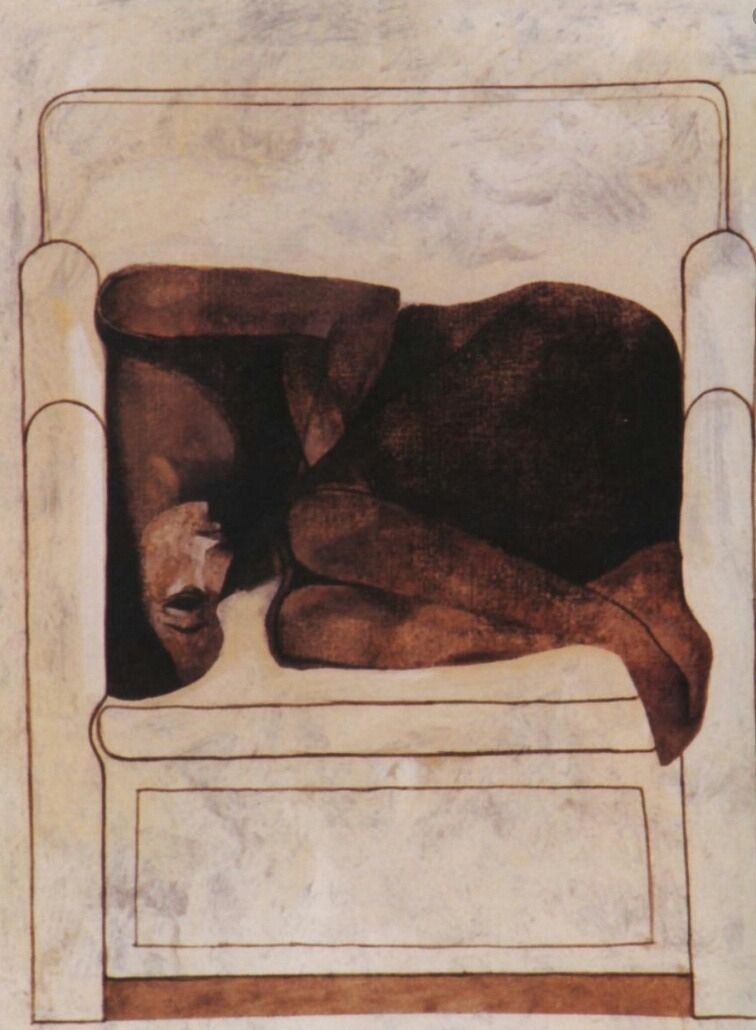
    I’ve seen too many paintings to remember most of them. By now, my eyes, trained in habit, skim brushstrokes the way others scroll through headlines with casual admiration and detached awe. I file things into categories like compositionally strong, or aesthetically interesting, but rarely do I feel pierced. And then, a few nights ago, a painting caught me in the middle of my evening ‘numb-scrolling’ through Pinterest. The painting arrived at me like a whisper you’re not sure you heard. Its image instantly invoked what I’ve been feeling lately — feeling crammed by comfort. When I first saw this piece, I had an odd sense of release, and relief despite the painting’s imagery of discomfort.

    I tried finding the name of this piece, but to no avail — my search didn’t yield any results. However, one of the millions of lovely Pinterest users, shared in the comment section that the artist was Safwan Dahoul. It’s quite a beautiful thing that someone can identify your work without any given details, particularly when it’s as subtly powerful as Dahoul’s cubist pieces.

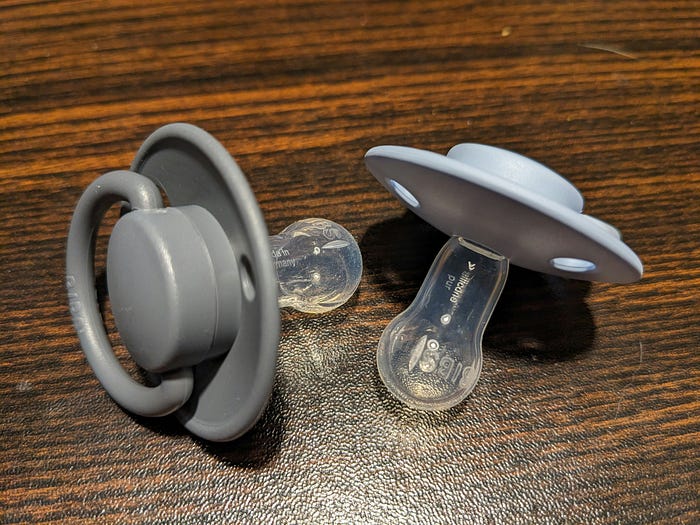
    Neat package
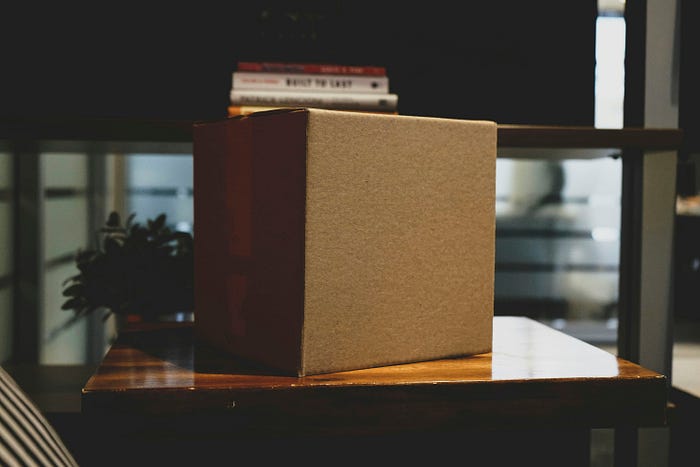
    Photo by Brandable Box on Unsplash

    Set against a light beige backdrop that resembles papyrus paper, a colorless couch holds a woman crammed between its arms. She doesn’t look like she was placed there, as the couch looks as if she has grown inside of it. The lines used for the couch are sharp, and lack imperfections except the lines on the left side of the chair at the top of her right shoulder down to where her head is located, you can see a bit of curvature. Similar to how you see a person’s imprint in a couch, or plush piece of furniture for a prolonged period of time after they get out of it.

    Although this painting doesn’t have any natural elements, it reminds me of vines, and fungi, how nature grows and intertwines with the physical elements around it.

    Maybe Safwan wanted the woman to not be a symbol of an object, but rather the object itself fuses into the woman’s being. Just as the sofa chair here fuses into the papyrus backdrop — giving it this timeless yet punctual feel. How long has the woman been laying in this chair? Has it been recent or longer? Is the couch molding to her body or is she conforming to the shape of the couch?

    I also noticed the woman’s nudity, and her cramped, fetal-like position. Her overwhelming size in contrast to the chair makes me wonder if Dahoul intended to portray a woman who has outgrown her surroundings. Alternatively, she might be engaging in self-infantilization, attempting to comfort herself by shrinking to fit into an unnatural or unsuitable space.

    The colors used in the piece aren’t the most striking. It’s only shades of brown — varying from the light beige of the backdrop to the charred palette of browns in the woman’s pigment.

    How long has the woman been laying in this chair? Has it been recent or longer? Is the couch molding to her body or is she conforming to the shape of the couch?

    It’s worth noting how the color of the woman is the most profound out of the whole painting. Her body, painted in the deepest registers of brown, from burnt umber to raw sienna to something that might be called the color of old wood, or dried blood, or the earth after rain, curves into the embrace of a sofa that seems to breathe with her lungs.

    Dahoul masterfully employs dark brown acrylics, transforming the woman into a chiaroscuro prism. Her skin pigment seemingly bleeds into the colorless sofa chair, giving it depth and warmth.

    One can also see the contrast of darker hues on her body that almost looks black in different parts, almost as if a void is swallowing her whole. On another hand, I suspect the multiple brown pigments that form her body aren’t just artistic choices but fragments. Maybe she is a crowd of women pressed into one exhausted pose. Or maybe each pigment is a version of her — pre-chair, post-chair, the ghost of her mid-morph.

    Another thing that stood out to me was the exaggerated two dimensional look of the painting. It reminds me of a flatten parcel box after you’ve taken the items out of it and decide to repurpose it. If you look closely, and long enough, you start to see the image look as if you are looking over the woman inside of a box(invisible that is). Safwan gives this overhead view instead of figures we can see at a straight angle. After more time gazing, the whole painting started to look smushed as if someone just came by, and stepped on the woman and the chair.

    To reiterate, the chair looks like it’s fusing into the backdrop itself, just as the woman here appears to be fusing into the chair. Looking at it from this angle, it piques the question of; was the woman placed here willfully or did she come along with the couch in a neat package?

    Woman as chair

    Upon looking at the painting, it reminded me of an eerie internet clip from the short film Tôkyô!’ that shows a woman literally turning into a chair.

    The backstory of this clip is Hiroko (the woman in the clip) awakens with a hole in her chest, which expands as her body transforms into an inanimate chair. Initially unnoticed by passersby, she reverts to human form when a man tries to take her home, fleeing nude before transforming back into a chair at a bus station. Hiroko discovers she can only be human when unseen. She strategically places herself as a chair, is taken in by a musician, and later writes a farewell letter to her lover as his filmmaking career begins.

    There’s horror here in this piece too, but quiet, like mold growing behind a wall. A kind of body horror, where literal boundaries blur. Where woman becomes thing. She’s not even objectified — but absorbed. Still, there is a possibility:

    • What if she chose this fusion?
    • What if she learned to camouflage so well that the environment cannot tell the difference between her and itself?
    • What if this merging is a strategy, not a submission?

    But there is something else here, something that resists my attempts to read this only as tragedy. In her folding, I also see a kind of strategy. She has contorted herself into a question mark, a puzzle that the eye cannot easily solve. Her facial expression is neutral and almost unreadable. Her interior life is protected by the fortress of her own limbs. This is camouflage, but also appears to be a choice. Safwan has chosen her to be both present and absent, to occupy the space while maintaining the mystery of her occupancy.

    Maybe Safwan wanted the woman to not be a symbol of an object, but rather the object itself fuses into the woman’s being.

    The chair, this sofa, becomes a threshold. It is the space where public and private collapse into each other, where the body that must be seen becomes the body that chooses how to be seen. In domestic spaces, women have always been expected to be like furniture — decorative, functional, expected to support the weight of others’ comfort. But she has inverted this logic. She has made the furniture part of her body, claimed its capacity to hold and be held, transformed the tool of her oppression into the architecture of her resistance.

    I think of my grandmama, who could fall asleep in any chair, who had learned to rest while remaining alert, who knew how to disappear into the upholstery while keeping one ear open for the sound of someone needing her.

    I think of the way women’s bodies become extensions of the spaces they tend, how their boundaries grow porous with use. How we learn to offer ourselves as comfort even when we are deserving of comfort as well.

    Brown

    Photo by Josephine Barham on Unsplash

    Moreover, another way to look at this is that Dahoul could be showing us how we tether ourselves to possessions, spaces, and environments that don’t fit us and vice versa.

    Living in a state of not growing, but mutating, and becoming something that doesn’t mirror our original nature. Speaking of nature once more, this could be why Safwan used shades of brown in his piece — as brown is universally associated with earthiness and the ancient world — a pastime that has now mutated into fractured three-dimensional pixels.

    On another hand, I suspect the multiple brown pigments that form her body aren’t just artistic choices but fragments. Maybe she is a crowd of women pressed into one exhausted pose. Or maybe each pigment is a version of her — pre-chair, post-chair, the ghost of her mid-morph

    The brown of her skin, the brown of the sofa, the brown of the earth that holds us all — these are the colors of endurance, of things that last not by resisting change but by changing slowly, deeply, with the patience of seasons. She is teaching me something about time, about the way survival happens in the accumulation of moments. That this isn’t a dramatic gesture but the quiet persistence of remaining, of finding a way to rest even in positions that were designed to make rest impossible.

    Comfort
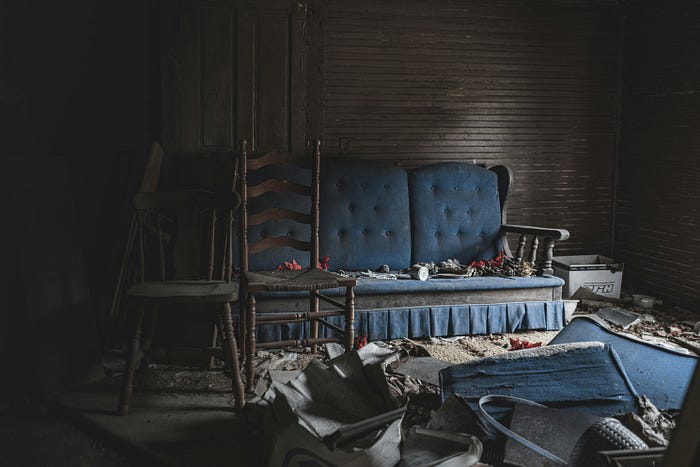
    Photo by Zachary Kadolph on Unsplash

    As I mentioned earlier, upon my first impression of this piece, I had a bolt of energy that ran down my chest to my stomach, and then this ten second window of release. Despite the imagery in the painting, I instinctively thought about comfort, but comfort that becomes uncomfortable. Lately, I’ve been craving movement, new surroundings, and new muses.

    I’m grateful for my own apartment, my means of shelter, however working from home, and having little to no social life makes my place look like the wallpaper in the painting. So familiar, so bland, that it bends right in, into everything else.

    I’ve worked hard to live on my own, and afford creature comforts at a young age. Yet, this place aches as gums do from an empty smile. Each day goes by I feel my body become larger than everything in here, pushing against a ceiling that I should be grateful for. Four walls wrap around me, and I’m not sure if it’s caress or protest to get me to leave.

    Leave? And go where? Where does Dereka fit? What is my true nature? Where can I grow without amputated roots?

    This is the soft horror of the everyday. The violence of stillness, of sitting very still while the world shapes itself around you. Becoming so familiar with your position that you forget you ever had the choice to stand.

    I do not know the name of this painting. Maybe it has none. Maybe names, like chairs, are just another shape we are told to fit ourselves into. And maybe this time, the woman is reshaping it from the inside out.


    Thank you for reading this piece of my soul. Please check out Safwan Dahoul and more of his works here. If you would like to read more of my essays and poetry, follow and subscribe to my Medium here. You can find me on Instagram as well @dsmithwrites.

  • We Say We Want Community — But Do We Really Mean It?

    We Say We Want Community — But Do We Really Mean It?

    Nurture yourselves and each other.” — is what I heard them say. And what I mean by “them” is the ones on the other side. A couple of months ago, I had a third-eye-that’s-so-raven moment where I heard this during the full moon in Taurus.

    If you don’t know, I’m kinda psychic… and maybe that’s one of the reasons why I haven’t found my community yet.

    Lately, I’ve been thinking about this message and also seeing more and more people speak up about how we need to have more community in our society (society as in — the Western world — just a small fraction of the globe). From Trump being re-elected in 2024 to the “loneliness epidemic,” I understand why people are championing this. However, I believe many people say a bunch of things over the internet that sound good and hopeful, but collectively they aren’t doing much in reality to make a difference.

    You really think you’re gonna overthrow oppressive systems but can’t even maintain a three-person group chat?

    Gen-Z: the generation that ghosts and grieves in the same sentence

    People, especially my generation (Gen-Z), have made it a habit to ghost, and on the other hand, expect to be ghosted in both platonic and romantic relationships. That’s on top of the fact that people don’t keep in contact with their closest relatives or friends in real life. But I know I’m going to get some people to say, “because of capitalism…” or “oh we don’t have third spaces…” and other rationales that don’t play a big factor in having genuine relationships. Yes, these are all real annoying barriers. But, they’ve also become a convenient shield for our own unwillingness to be accountable to others in the smallest, most human ways.

    Our parents and older generations would invite their friends over for pizza or play a game of cards or just talk on the phone for hours. For instance, my mom would spend hours on the phone with her friend after work (or on her day off) while doing tasks around the house. My mom and her friend didn’t have brunch spots and karaoke bars, especially while living in the Mississippi Delta. She had her Blackberry phone and laundry to fold. She still managed to talk to her best friend every week while upholding her work life and familial relationships.

    We say we don’t have time to hang out or check in, but people will spend hours watching TikToks of strangers crying in their car. We give our attention to spectacle, not to each other. And then turn around and romanticize deep friendships, community living, found families, but treat people in real life like notifications we’ll get to later.

    Real-world scenario kids

    I had a friend who I met through the oh-so-wonderful Bumble BFF app (that’s another blog for another day), and we agreed to meet for the first time for brunch. We met up and everything went well; we had some good food, mimosas, and a nice chit-chat that went on for about 2 hours.

    Post-first meetup (first and last): We had these long drawn out conversations via text for about 2 months. I mean I don’t know about you girlypops but there is nothing normal about stretching out a text after asking a simple question: “What are your plans for the weekend?”

    For another month, I would suggest doing something together but I was met with either 4-day responses or something “came up.” Then, one day — dead silence.

    After almost 3 weeks of not hearing from her, she then suddenly wants to meet up for an outdoor jazz event out of nowhere. At first, I wanted to go, but then I canceled due to my “trauma response” where I abandon before being abandoned. Since then, we haven’t spoken to each other.

    We say we don’t have time to hang out or check in, but people will spend hours watching TikToks of strangers crying in their car

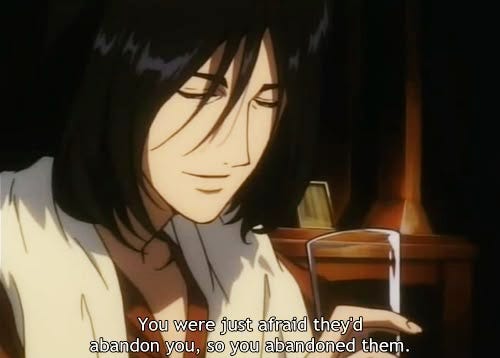
    And I’m not above any of this. I’ve ignored people I loved and I made excuses. I’ve watched myself slowly fade from someone’s life like it didn’t matter, and then pretended I didn’t notice when the distance turned permanent. My own silence has become habit, and has made detachment look like independence and being “mature for my own age.”

    Image found on Pinterest. This scene is from Cowboy Bebop (1999).

    If I had to theorize, I would say I think we’re terrified. Scared if someone really saw us — how inconsistent we are, how unsure, emotionally strange, and socially misshapen we’ve become, then they’d leave too. So, we don’t give them the chance.

    Gendered hypocrisy

    OOOOO nobody’s safe! Yes, I’m about to get on my girlies, my girlfriennndddds (Girlfriends TV show tune) too.

    What’s been eating at me lately is how easily we accept distance in our platonic relationships, especially cis women. The same women who would spiral if their boyfriend took six hours to respond will go six weeks without checking in on a friend. And I’m tired of pretending that’s okay and it doesn’t hurt.

    Image from Wikipedia. Image is the Girlfriends TV intro.

    We give romantic partners the kind of effort, presence, and forgiveness we don’t even offer to our friends. And I think a lot of women don’t realize that we’ve internalized this illusion that romantic love is urgent, and it’s supposed to be dramatic and all-consuming. Yet, friendship is optional, decorative, the side dish to your main emotional meal. But friendship is one of the relationships most of us will have for decades longer than many romantic partners. And still, we don’t treat it like it matters. We don’t fight for our friendships (even familial relationships) the way we beg men to care about us.

    And if we want to go deeper — some of us are committed to healing our inner child through romance, but wouldn’t know how to receive softness from a friend unless it came with the threat of losing them. You know how to chase, but don’t know how to be witnessed gently.

    Fellas, fellas, fellas

    If women are taught to overextend, be available, forgiving, and self-sacrificing, then men are taught the opposite. Most of the men I’ve known, and the ones I’ve eavesdropped on from a distance, aren’t building their friendships around care, softness, or presence. They’re building them around permission. Permission to be seen as successful, powerful, and untouchable. Most of their “bonds” are based on mutual ego-stroking, a group project in patriarchal validation, as long as no one actually says they’re lonely or going through a rough period in their life.

    These are friendships defined not by active connection, but by absence without consequence. Their friendships don’t require tending, they just exist in some suspended state of assumed loyalty that doesn’t demand emotional effort. And when SHTF — loss, heartbreak, mental illness — most of them don’t even go to each other. They go to the women in their lives. Their girlfriend, their mom, maybe a sister. Or they don’t go to anyone at all.

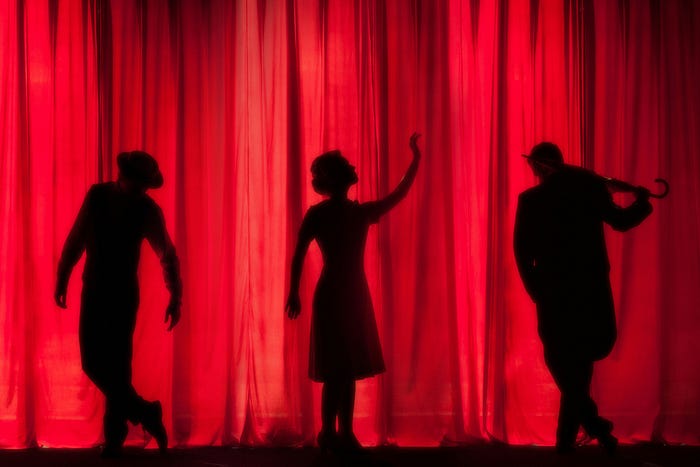
    Photo by K F on Unsplash

    And it makes sense, because men are taught that vulnerability between men is a risk. Most haven’t been given the emotional tools to say, I need you, or I’m hurting, or even I miss you, without it being filtered through “no homo” jokes, sports talk, or some shallow excuse to link. Their friendships revolve around activities, achievements, group chats with zero depth and sardonic memes, and sometimes, thinly veiled competition. The big unspoken rules among them are: don’t need too much. Don’t be too soft. Don’t get too close.

    And if we want to go deeper — some of us are committed to healing our inner child through romance, but wouldn’t know how to receive softness from a friend unless it came with the threat of losing them

    So what happens is this:

    A man can have ten friends and still die of emotional starvation. He can go to the gym with them, game with them, drink with them, talk money or girls or sports, but none of them know how to hold grief. None of them know how to say, you don’t have to act okay here.

    And then they enter romantic relationships carrying that starvation, expecting their partner to be therapist, best friend, co-regulator, their mommy and emotional processor all in one. Because they’ve never had to sit with these feelings and experience among their peers.

    Performative activism & false collectives

    Now, time for the collective callout. I’ve seen so many people (myself included) wrap ourselves in the language of radical care, abolitionist futures, decolonial collectives, and mutual aid, while not even knowing how to say no in real life. You talk about “revolution” but can’t even tell your friend they hurt your feelings. You want to dismantle systems but can’t even make a doctor’s appointment over the phone. You can’t even stand up to your boss.

    We are fluent in the aesthetics of liberation, fluent in the language of collectivity, but allergic to the practice of it. However, I get it — saying the right things online feels safer than having to do the awkward, clumsy, low-stakes, and maybe risky things in your actual life. Like checking on a friend, asking for help, or setting a boundary. Or calling something out when it’s happening in front of you, not just when it’s trending.

    Photo by Kyle Head on Unsplash

    It’s easy to sound like a radical on Twitter. It’s easy to talk about community gardens when you haven’t even watered your own relationships. It’s easy to say “burn it all down” when you’ve never had to rebuild anything in your own life.

    Honestly, I’m intrigued by it. Intrigued by the way we sometimes parade as organizers, healers, artists, and mutual-aid architects, when half of us still flinch at confrontation and most of us are running from the kind of vulnerability and truth that real community demands.

    I’m not saying it’s all fake or a fantasy to hope for these changes; but we must first confront the fact that we pretend we’re part of something just so we don’t have to admit how alone we really feel.

    Soft but firm reckoning

    I know I came in with this pretty strong; again I have done some of the things I’m calling out here. Truth AND accountability really does set you free. But, I’m trying.

    I’m trying to stop rehearsing loneliness like it’s my final act. Stop confining myself to my home to hide from the world and only interacting with it through a screen.

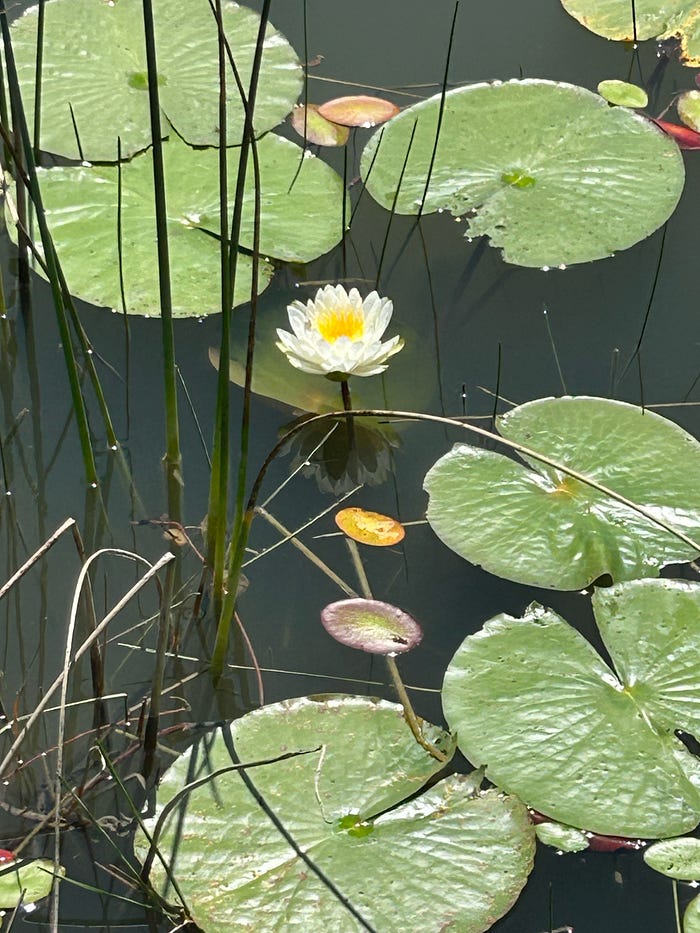
    Photo taken by me while at a local park.

    Because the truth is, I do want community. Having zero friends nor any “associates” (no exaggeration) is extremely isolating and it starts to mess with your mind. Plus, I want to share my gifts, my love and care, to to others as well. So yes, I want softness that doesn’t require translation. I want people who know how to knock before entering, and also know how to come in anyway when I leave the door cracked. But wanting it isn’t enough. Writing this isn’t enough. I have to build it slowly and imperfectly, with the people already around me (even if it’s just my parents and my dog), not the fantasy of who I think my “tribe” is supposed to be.

    So here’s where I’ll leave you (no pun intended there)

    Who’s one person you haven’t talked to in a while whom you actually miss? Not someone who hurt you or drains you. Someone you miss.

    Why haven’t you called them? Why haven’t you asked them how they’re really doing?

    Don’t answer out loud. Just sit with it.

    Then maybe, when you’re ready, do something about it.


    Thank you for making it this far through my rambling! If you would like to read more from me, follow and subscribe for the latest posts. Also, check out my website here.