They have done it. It’s alive, it’s alive, it’s alivvvveeee.
I was scrolling through my Linkedin feed and came across this one post from a tech bro- promoting this new platform that has more “soul” than Midjourney. This new AI tool can generate hyperrealistic photos that look similar to the selfies and photo-ops in your camera roll. Astonishment and underlying dread filled within me. Despite my contrarian views on AI, the image generation was horrifically impressive. However, this feeling turned into a thought that’s been circulating in my head for some time now — AI tools like this are showing tech’s fast growing power. Although I’m not against technological advancements for society’s good, I wonder if all AI generated content like images, deepfakes, text, and even research journals will start creating mass hysteria and delusion.
How can humans who were just joking about “brain-rot” from overconsumption of human generated content will be able to tell the difference between AI? There are already reports about how people are using GPT as a therapist and how AI users are more prone to delusion.
Is this all a side effect of a society that is physically and existentially fatigued? Is society merely sleepwalking through life, lost in a deep slumber, dreaming a mix of pleasant, feverish, and nightmarish dreams? Are we living in a time of illusions instead of illumination as promised by the conception of the Internet? Did ignorance come after the snake in the garden? Is it innate in mankind to be unreliable narrators in a universe that shifts at the drop of an apple?
Year of the Snake: Even the Stars Got Something to Say
What if the Mayans were right — what if the world really did end in 2012? And we are all just dreaming now.
Now, it’s 2025, and according to Chinese Astrology, this is the Year of the Snake.
Snakes shed what they were to become what they are — the same creature wearing different skin. The Year of the Snake arrives in 2025 carrying this paradox in its coils. We stand at a moment where every photograph might be generated, every voice might be synthesized, and every thought might be prompted.
The serpent moves without limbs, navigating reality through pure contact with surface. Each scale reads the ground like braille, constructing understanding through friction rather than sight. AI operates through similar means — processing patterns without comprehension, building worlds from statistical residue.
We have created entities that perform understanding without possessing it. They speak fluently in languages they cannot hear, paint portraits of faces they cannot see, while writing poetry about emotions they cannot feel.
The Moon: ‘Seeing is Believing’
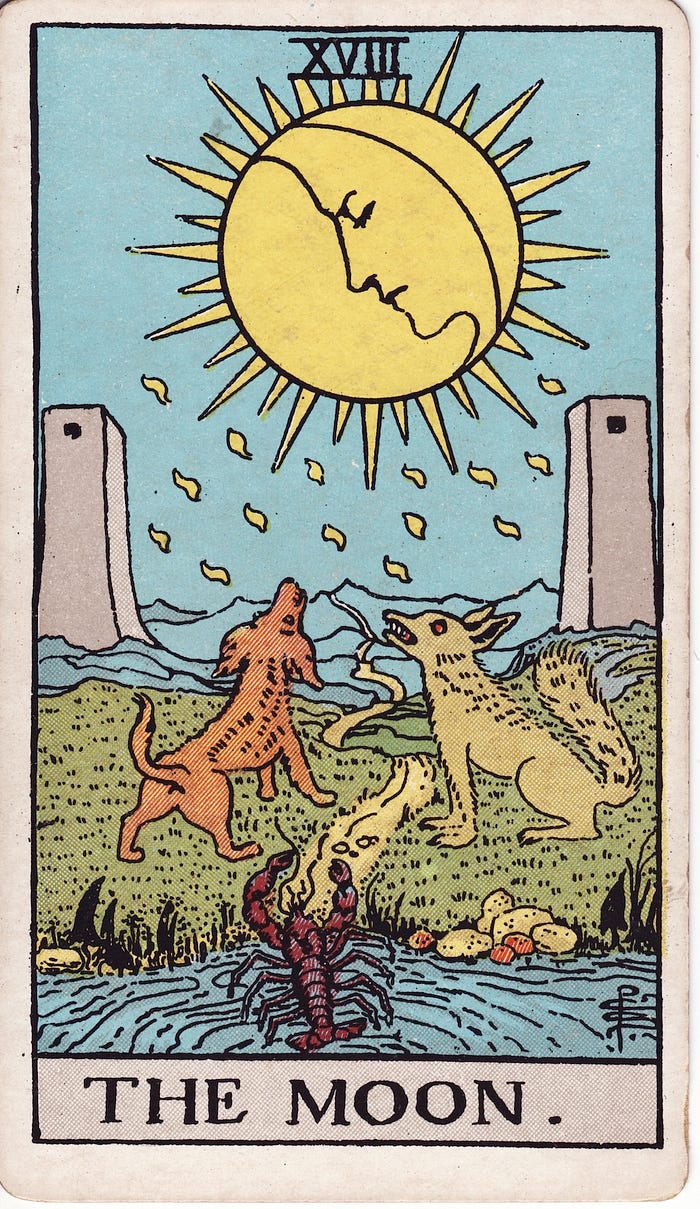
The Moon Card from the Rider Waite Tarot Deck — Image from Wikipedia
It became a ritual for me to pull cards at the beginning of a new year — a reading for myself and one for the collective. For the collective, I asked for a card to represent this year and out came the Moon tarot card.
If you don’t know, the Moon tarot card reveals common meanings such as illusions, needing to tap into one’s intuition, exploring your subconscious mind, and to achieve clarity by discerning deceptions.
The Moon tarot card depicts two towers, a dog, a wolf, and a crayfish emerging from primordial waters. Between them hangs the lunar face, dropping eighteen rays of light that illuminate nothing clearly. Medieval cartomancers understood this card as the realm where solid things become liquid, where the familiar grows strange teeth. They could not have imagined that their gnosis would literalize itself through silicon and code.
The Moon in both reality and the Tarot, reflects the general dream of humanity. The full moon is like the value on a pressure cooker, it allows the unprocessed emotions and desires of humanity to safely release a bit of pressure. Once we die, we get to see how we were held down to earth — kept in physical existence — by the heaviness of our inner tides.
We obviously have seen the power of AI and what it can do. It has shown potential to create cinematic videos, full novels, and even grocery lists.
It poses as a tool that can create unlimited possibilities, yet can this be an illusion in itself? And a tempting one at that.
It says a lot about our current state as a society when you have people in the comments sections asking if an image or video is AI. I’m torn as to which is more frightening; the inherent unsustainability of AI itself, or the individuals who consume its outputs, having lost the ability to discern their own thoughts.
As a copywriter for a marketing agency, my role is to create content for the agency itself. The agency has recently begun incorporating more AI-powered creative solutions for its clients, a decision made independently of my input. But, it’s surreal to think that we will now be seeing AI generated ads as if most people have already grown a tolerance for ads in the first place.
Seeing things like this, makes me wonder — where is all this content really coming from? Yes, the obvious answer is LLMs and feeding a bunch of artists’ work (unsolicited) into this machine. But, what about tools like mentioned earlier, where it’s showing “hyperrealistic” people. Whose faces are they taking? Are they using your selfie you posted a week ago on Facebook?
If you’re anyone like me (a spiritualist) or study esoteric knowledge, you try to connect the spiritual with the “3-D” world. I’m from the Deep South, and there is a saying that comes all the way from the Gullah-Gechee — about how some spiritualists took limited pictures or none at all in their lifetime, because they believed that to capture one’s image is to capture their soul. In more contemporary terms, be wary of those who observe you; their intentions might be to usurp your position or consume your very essence.
Overall, where do we draw the line? Maybe it all comes down to whether AI promotes more democratization of information and knowledge or is it harvesting our lives and souls in the name of “revolutionizing?”
Thanks for reading! If you’d like to explore more of my essays about my inner and outer world, please follow and subscribe to my Medium, or visit my website.
I’ve seen too many paintings to remember most of them. By now, my eyes, trained in habit, skim brushstrokes the way others scroll through headlines with casual admiration and detached awe. I file things into categories like compositionally strong, or aesthetically interesting, but rarely do I feel pierced. And then, a few nights ago, a painting caught me in the middle of my evening ‘numb-scrolling’ through Pinterest. The painting arrived at me like a whisper you’re not sure you heard. Its image instantly invoked what I’ve been feeling lately — feeling crammed by comfort. When I first saw this piece, I had an odd sense of release, and relief despite the painting’s imagery of discomfort.
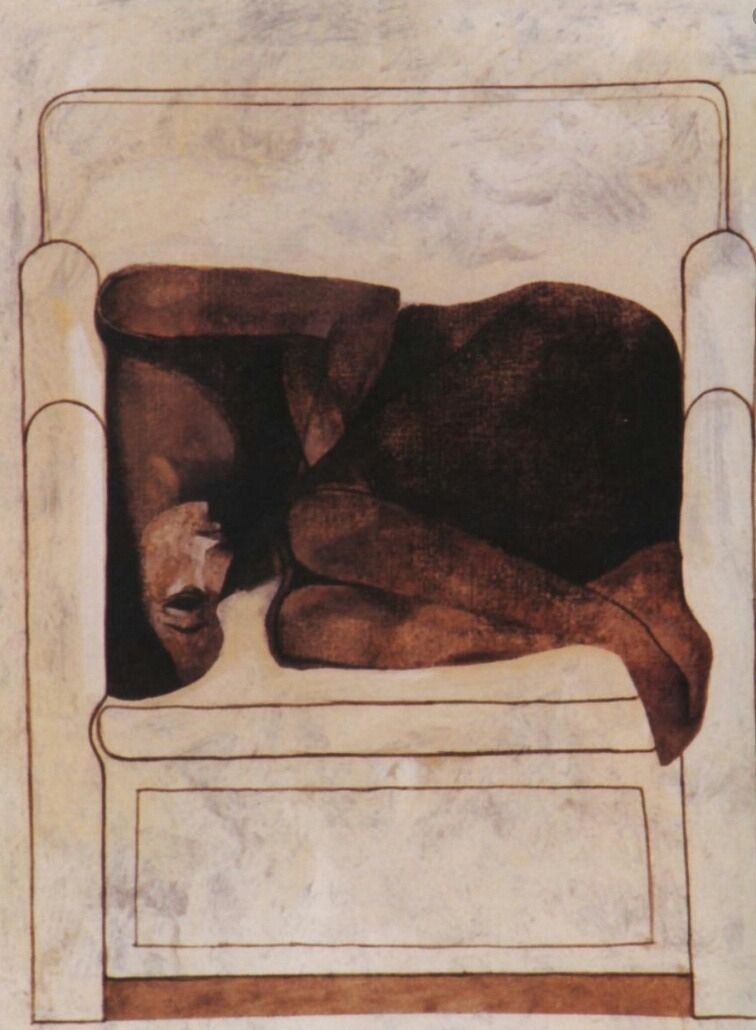
I tried finding the name of this piece, but to no avail — my search didn’t yield any results. However, one of the millions of lovely Pinterest users, shared in the comment section that the artist was Safwan Dahoul. It’s quite a beautiful thing that someone can identify your work without any given details, particularly when it’s as subtly powerful as Dahoul’s cubist pieces.
Set against a light beige backdrop that resembles papyrus paper, a colorless couch holds a woman crammed between its arms. She doesn’t look like she was placed there, as the couch looks as if she has grown inside of it. The lines used for the couch are sharp, and lack imperfections except the lines on the left side of the chair at the top of her right shoulder down to where her head is located, you can see a bit of curvature. Similar to how you see a person’s imprint in a couch, or plush piece of furniture for a prolonged period of time after they get out of it.
Although this painting doesn’t have any natural elements, it reminds me of vines, and fungi, how nature grows and intertwines with the physical elements around it.
Maybe Safwan wanted the woman to not be a symbol of an object, but rather the object itself fuses into the woman’s being. Just as the sofa chair here fuses into the papyrus backdrop — giving it this timeless yet punctual feel. How long has the woman been laying in this chair? Has it been recent or longer? Is the couch molding to her body or is she conforming to the shape of the couch?
I also noticed the woman’s nudity, and her cramped, fetal-like position. Her overwhelming size in contrast to the chair makes me wonder if Dahoul intended to portray a woman who has outgrown her surroundings. Alternatively, she might be engaging in self-infantilization, attempting to comfort herself by shrinking to fit into an unnatural or unsuitable space.
The colors used in the piece aren’t the most striking. It’s only shades of brown — varying from the light beige of the backdrop to the charred palette of browns in the woman’s pigment.
How long has the woman been laying in this chair? Has it been recent or longer? Is the couch molding to her body or is she conforming to the shape of the couch?
It’s worth noting how the color of the woman is the most profound out of the whole painting. Her body, painted in the deepest registers of brown, from burnt umber to raw sienna to something that might be called the color of old wood, or dried blood, or the earth after rain, curves into the embrace of a sofa that seems to breathe with her lungs.
Dahoul masterfully employs dark brown acrylics, transforming the woman into a chiaroscuro prism. Her skin pigment seemingly bleeds into the colorless sofa chair, giving it depth and warmth.
One can also see the contrast of darker hues on her body that almost looks black in different parts, almost as if a void is swallowing her whole. On another hand, I suspect the multiple brown pigments that form her body aren’t just artistic choices but fragments. Maybe she is a crowd of women pressed into one exhausted pose. Or maybe each pigment is a version of her — pre-chair, post-chair, the ghost of her mid-morph.
Another thing that stood out to me was the exaggerated two dimensional look of the painting. It reminds me of a flatten parcel box after you’ve taken the items out of it and decide to repurpose it. If you look closely, and long enough, you start to see the image look as if you are looking over the woman inside of a box(invisible that is). Safwan gives this overhead view instead of figures we can see at a straight angle. After more time gazing, the whole painting started to look smushed as if someone just came by, and stepped on the woman and the chair.
To reiterate, the chair looks like it’s fusing into the backdrop itself, just as the woman here appears to be fusing into the chair. Looking at it from this angle, it piques the question of; was the woman placed here willfully or did she come along with the couch in a neat package?
Woman as chair
Upon looking at the painting, it reminded me of an eerie internet clip from the short film ‘Tôkyô!’ that shows a woman literally turning into a chair.
The backstory of this clip is Hiroko (the woman in the clip) awakens with a hole in her chest, which expands as her body transforms into an inanimate chair. Initially unnoticed by passersby, she reverts to human form when a man tries to take her home, fleeing nude before transforming back into a chair at a bus station. Hiroko discovers she can only be human when unseen. She strategically places herself as a chair, is taken in by a musician, and later writes a farewell letter to her lover as his filmmaking career begins.
There’s horror here in this piece too, but quiet, like mold growing behind a wall. A kind of body horror, where literal boundaries blur. Where woman becomes thing. She’s not even objectified — but absorbed. Still, there is a possibility:
What if she chose this fusion?
What if she learned to camouflage so well that the environment cannot tell the difference between her and itself?
What if this merging is a strategy, not a submission?
But there is something else here, something that resists my attempts to read this only as tragedy. In her folding, I also see a kind of strategy. She has contorted herself into a question mark, a puzzle that the eye cannot easily solve. Her facial expression is neutral and almost unreadable. Her interior life is protected by the fortress of her own limbs. This is camouflage, but also appears to be a choice. Safwan has chosen her to be both present and absent, to occupy the space while maintaining the mystery of her occupancy.
Maybe Safwan wanted the woman to not be a symbol of an object, but rather the object itself fuses into the woman’s being.
The chair, this sofa, becomes a threshold. It is the space where public and private collapse into each other, where the body that must be seen becomes the body that chooses how to be seen. In domestic spaces, women have always been expected to be like furniture — decorative, functional, expected to support the weight of others’ comfort. But she has inverted this logic. She has made the furniture part of her body, claimed its capacity to hold and be held, transformed the tool of her oppression into the architecture of her resistance.
I think of my grandmama, who could fall asleep in any chair, who had learned to rest while remaining alert, who knew how to disappear into the upholstery while keeping one ear open for the sound of someone needing her.
I think of the way women’s bodies become extensions of the spaces they tend, how their boundaries grow porous with use. How we learn to offer ourselves as comfort even when we are deserving of comfort as well.
Moreover, another way to look at this is that Dahoul could be showing us how we tether ourselves to possessions, spaces, and environments that don’t fit us and vice versa.
Living in a state of not growing, but mutating, and becoming something that doesn’t mirror our original nature. Speaking of nature once more, this could be why Safwan used shades of brown in his piece — as brown is universally associated with earthiness and the ancient world — a pastime that has now mutated into fractured three-dimensional pixels.
On another hand, I suspect the multiple brown pigments that form her body aren’t just artistic choices but fragments. Maybe she is a crowd of women pressed into one exhausted pose. Or maybe each pigment is a version of her — pre-chair, post-chair, the ghost of her mid-morph
The brown of her skin, the brown of the sofa, the brown of the earth that holds us all — these are the colors of endurance, of things that last not by resisting change but by changing slowly, deeply, with the patience of seasons. She is teaching me something about time, about the way survival happens in the accumulation of moments. That this isn’t a dramatic gesture but the quiet persistence of remaining, of finding a way to rest even in positions that were designed to make rest impossible.
As I mentioned earlier, upon my first impression of this piece, I had a bolt of energy that ran down my chest to my stomach, and then this ten second window of release. Despite the imagery in the painting, I instinctively thought about comfort, but comfort that becomes uncomfortable. Lately, I’ve been craving movement, new surroundings, and new muses.
I’m grateful for my own apartment, my means of shelter, however working from home, and having little to no social life makes my place look like the wallpaper in the painting. So familiar, so bland, that it bends right in, into everything else.
I’ve worked hard to live on my own, and afford creature comforts at a young age. Yet, this place aches as gums do from an empty smile. Each day goes by I feel my body become larger than everything in here, pushing against a ceiling that I should be grateful for. Four walls wrap around me, and I’m not sure if it’s caress or protest to get me to leave.
Leave? And go where? Where does Dereka fit? What is my true nature? Where can I grow without amputated roots?
This is the soft horror of the everyday. The violence of stillness, of sitting very still while the world shapes itself around you. Becoming so familiar with your position that you forget you ever had the choice to stand.
I do not know the name of this painting. Maybe it has none. Maybe names, like chairs, are just another shape we are told to fit ourselves into. And maybe this time, the woman is reshaping it from the inside out.
Thank you for reading this piece of my soul. Please check out Safwan Dahoul and more of his works here. If you would like to read more of my essays and poetry, follow and subscribe to my Medium here. You can find me on Instagram as well @dsmithwrites.
The dollhouse broke beneath the bruise of noon.
Somebody painted curtains on the walls
yellow strokes, still wet after a decade.
They stuck to my breath as I inhaled them,
swallowed the chalky sting of citrus dusk.
The moon hung low above the glass orchard,
I sat in the crater of a child’s room,
where nothing could rot, and so nothing could live.
The mattress was imprinted with the shape
of a little girl who had slept too still
for too long. Her teeth were folded into
a velvet envelope, mailed nowhere, sealed
with strawberry glue. Each dresser had a throat,
they whispered when I opened them.
A pitcher was nailed to the table with
lemon rinds peeled and scarred eternally.
The moon was never made of sugar.
I learned that in the sixth hour, when the
sky starts to churn like an empty stomach.
While the ants came in rows to steal the rest—
a leg, a knob, a lemon, the hinges from
doors I wasn't planning to walk into. The girl
returned on the tenth night or her twin did.
She had a screen for a face. It played
only one scene, her pouring lemonade
into her own open mouth, while her body
smoked from the inside. I tried to scream, but
my tongue was a little curled lemon
slice pressed to the rim of an untouched cup.
The moon grew brighter as if it too were
watching a show it couldn’t look away from.

Ⓒ Written by Dereka M. Smith 2025
Thank you for reading this piece of my soul. If you would like to read more of my essays and poetry, subscribe down below or visit my website here. You can find me on Instagram as well @dsmithwrites.
My first real boyfriend was twenty-nine and I was nine years under, with a love fever that needed more than broth and crackers. He spoke like a professor but cooked like a cult leader. Slow and serious, always claiming this would be the best thing I’d ever eat. Russian plov, ropa vieja, saffron threads that clung to rice like lint. He was a man who had a palette for chocolate, and who liked to watch my reactions like he was grading me on them. I barely liked him — let alone loved him — but there was something about being cooked for that made me feel chosen, even for a moment.
“Close your eyes,” he’d say, standing over me with a wooden spoon. “Whatcha think?”
I’d sit on the barstool at his kitchen island, my ankles crossed while slightly impressed. The cumin would hit first, then the smokiness, then something I couldn’t place — maybe sumac, or maybe his smugness.
The food stayed with me long after the man left. And even now, years later, I sometimes wonder if what I wanted most was the sound of a hush that falls when someone sets a plate in front of you and says, “This is for you.”
Solo date
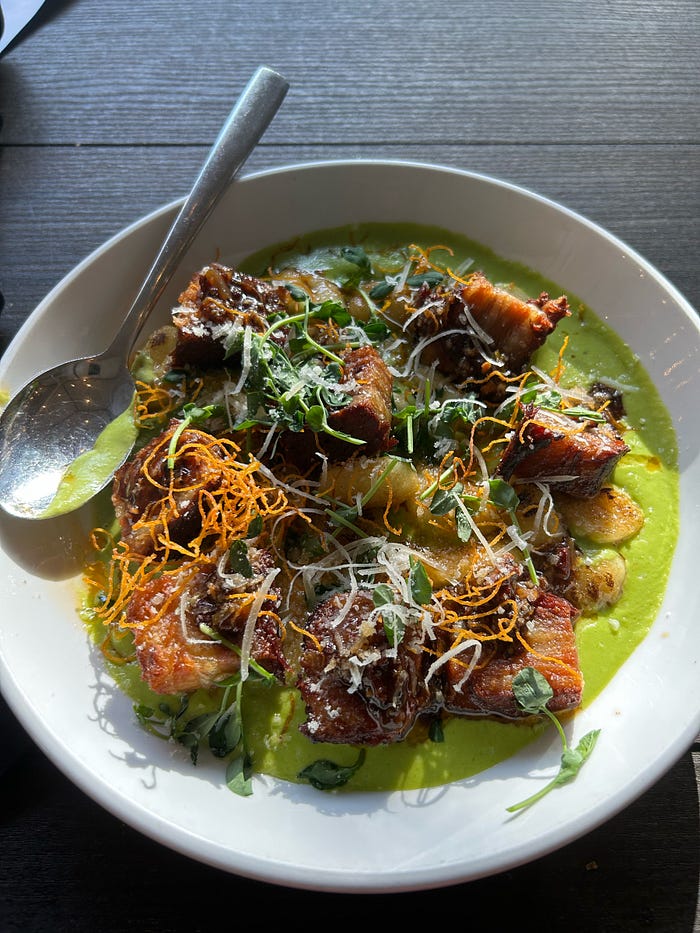
Last week, I took myself out on a solo date again to this gastropub in Houston, and I dropped thirty dollars on a pork belly gnocchi plate. My server said with the same vocal inflection as a salesman, “Pork belly is good! Had it for lunch today. You should try it!” Minutes later, it arrived steaming.
The plate filled with seared golden mini pillows beneath thick hunks of pork belly that glistened even in the shade, while sitting in a pool of lime green demi-glace. I was halfway through the bowl before I realized I felt something in my chest. Like my heart is trying to keep up with the pace of the rest of my body.
Photo of Pork Belly Gnocchi dish taken by me.
This is how I’ve always eaten. With desperation disguised as appetite, like I’m trying to fill a space that keeps expanding, no matter how much I try to fill it. Food isn’t neutral in my life. It’s currency and weapon, celebration and punishment. It’s what I turned to when everything else turned away.
And everything else has turned away. That’s the one constant I can count on.
Side dish
I come from a lineage where food carries the weight of everything we can’t say out loud. It fills the gaps when words fail, and when comfort has no place to land. In our family, we expressed love through cast iron skillets and mason jars of bacon grease saved as family heirlooms.
I remember the time my grandma and aunt took me to a catfish spot in Greenwood. I must’ve been six or seven, all elbows and questions. The place was dim, thick with the smell of hot oil and something else — something that made my chest tight. On one of the walls, a bear’s head snarled from above the counter, frozen mid-roar. Above it, fluorescent lights buzzing like the trapped insects in the windowsills of this place.
“Why you keep staring at that thang?” my aunt whispered, but I couldn’t look away. The bear’s glass eyes seemed to follow me as we slid into a booth with cracked vinyl seats.
Suddenly, tears erupted from my eyes, and I started getting lightheaded while scanning around the dining room. At the time, I didn’t understand why younger me caused “a scene” like that. Maybe because the bear looked so angry, or because the oil smell reminded me of my grandmother’s kitchen at five in the morning, or because of the pregnant man I saw, then all these pregnant old women or because everything felt too big and too small at once. My aunt shushed me, embarrassed by my tears. My grandma just pushed her plate away, barely touched.
Sometimes I think about how often I watched my grandma cook but rarely saw her eat. Whenever my mom or daddy would drop me off at her house in the morning, she would already be up cooking. She would always say she had been up since five or six. Without the sun’s permission, her hands already reached for flour and salt, prepared meals that could feed a congregation. Collards simmered low and slow, cornbread baked until the edges pulled away from the pan, chicken soaked in buttermilk overnight. But when it was time to eat, she’d pick like a bird — a forkful of greens, a sip of sweet tea, her attention always on everyone else’s plate.
I come from a lineage where food carries the weight of everything we can’t say out loud. It fills the gaps when words fail, and when comfort has no place to land.
“That’s all you gon eat, baby?” she’d ask me, spooning more rice onto my plate while hers sat in a pile.
Her hands, swollen from arthritis, moved like they were conducting an orchestra only she could hear. Even at rest, her fingers twitched like they were still stirring and serving. Her appetite was a matter she kept from all of us, including herself.
Her son, my father cooked with the force that needed to prove something to somebody. Enough force to “make you wanna slap yo own mama” or “knock grandma out with this here!” Sunday dinners were his sermons, neck bones and cabbage for his congregation. He’d stand over the stove, beer in one hand, wooden spoon in the other, tasting and adjusting until the juices was perfect.
“Come here,” he’d call to me, holding out the spoon. “Who is the Chef BoyarDEE?” a question he shouted to verbally emphasize the sound of the first letter of his government, yet non-trademarked name.
The broth would be rich and smoky with an aroma that made your sinuses clear just from breathing it in. I’d nod seriously, like I was judging a cooking competition, and he’d smile — one of the few genuine smiles I remember from those years.
But, he and my grandma both had their own ways of saying, “ I need something sweet to eat.” My father with sugar and alcohol, my grandma with all salt and silence. Diabetes runs through our bloodline like an old wives tale. The story changes with the person, but everyone seems to know the ending.
My father’s done the same thing I do, only quieter. He builds altars out of fast food bags and Mountain Dew bottles. I found honey buns in his truck once, wrapped in plastic like secrets. He looked at me like I was holding something sacred. Then he laughed.
The side dishes fill the table, make the meal complete. But in my life, they’ve always been the moments that reveal the most — the untouched plates, the careful portions, the way we feed others what we won’t allow ourselves. The spaces between the words we want to say.
The first time I threw up on purpose, I was thirteen and rail-thin, ribs showing through my school uniform. I’d eaten a sleeve of saltines after school, then panicked about the calories. The bathroom tiles were cold against my knees. I was already skinny, but my looks was the only thing I could keep under control when everything else was chaos.
“You need to eat more.” my daddy would grunt, watching me push food around my plate. But eating felt dangerous, like stepping off a cliff. Better to stay small, stay safe, and stay in control than to risk something else falling apart.
The summer I turned sixteen, I spent three weeks eating nothing but what I could hide. My father would let me know how angry he was every night — my mom, money, work, the weight of trying to keep us afloat in a town that was designed to sink. After he would pass out from his four-hour lecture, I’d slip away to my room with whatever I could carry.
Sometimes dinner was a bag of leftover Shipley’s donuts devoured before dad got home. Other times, I rationed air. One granola bar had to last the whole day. I didn’t call this anything. I didn’t name it. It was just how I lived. Just how I kept the walls from folding in.
The worst part wasn’t the overeating or the restriction, but sitting still after the ravaging and feeling nothing shift inside.
After graduating, I remember going to the YMCA track and circling it over and over again like I was orbiting something — myself, maybe? Or some future version of me I hoped to run into?
I would walk for hours, under the punishing heat of the Mississippi Delta sun, headphones in, legs burning, hoping the movement would undo something in me. Maybe if I kept walking long enough, my body would return to me in a way that made sense.
Sometimes dinner was a bag of leftover Shipley’s donuts devoured before anyone dad got home. Other times, I rationed air… I didn’t call this anything. I didn’t name it. It was just how I lived.
I’d be lightheaded from not eating, a sip of water sloshing in my gut like a secret. Afterwards, I’d reward myself at Pasquale’s — the local food joint just down the block from the track — and order burger and wing platters without hesitation. I never needed an excuse. The hunger was the excuse.
I called this a “gap year,” though there was nothing expansive about it. It was a year of bed-rotting, walking, eating, repeating. I told myself I needed time to rest and figure things out. But rest only feels like rest when you have a sense of peace to return to. Mine had long since disappeared.
Consequently, this cycle caused distortion in myself where I started looking at my body as if the bio clock could freeze at any moment now. I began wearing the same three outfits over and over again, because the clothes were the only things that “looked good” on me.
I began to shrink in every way that didn’t involve food. I made myself small even in bite-sized conversations. I avoided mirrors. I refused invitations I wasn’t even receiving. And somewhere along the line, I stopped asking for anything, whether it was food, help, or love. At some point, they start becoming synonymous anyway.
I turned twenty-three inside of an art museum’s Michelin star restaurant where the walls gleamed like porcelain and the silverware clinked with surgical precision. I’d made a reservation a week in advance even though no one was coming. But still, I wanted to convince myself the night mattered.
“How many is it?” the hostess asked, scanning the space behind me.
“Just me.” I answered, and watched her eyes fall like a mouth to the floor.
She seated me at a corner table, tucked away. Tucked away is how I like it, cozy. I wore a black dress that hung loose in places it used to fit, my hair pinned up to expose the sharp angles of my collarbones. I’d spent an hour on makeup, blending and contouring like I was painting myself back into existence.
I chose the three-course seasonal menu, because why not. Course by course, each plate arrived as miniature canvases. The waiter described each dish with the cadence of a museum guide, but I retained nothing. My mind was elsewhere, counting the empty chairs at nearby tables, watching couples lean into each other over shared appetizers.
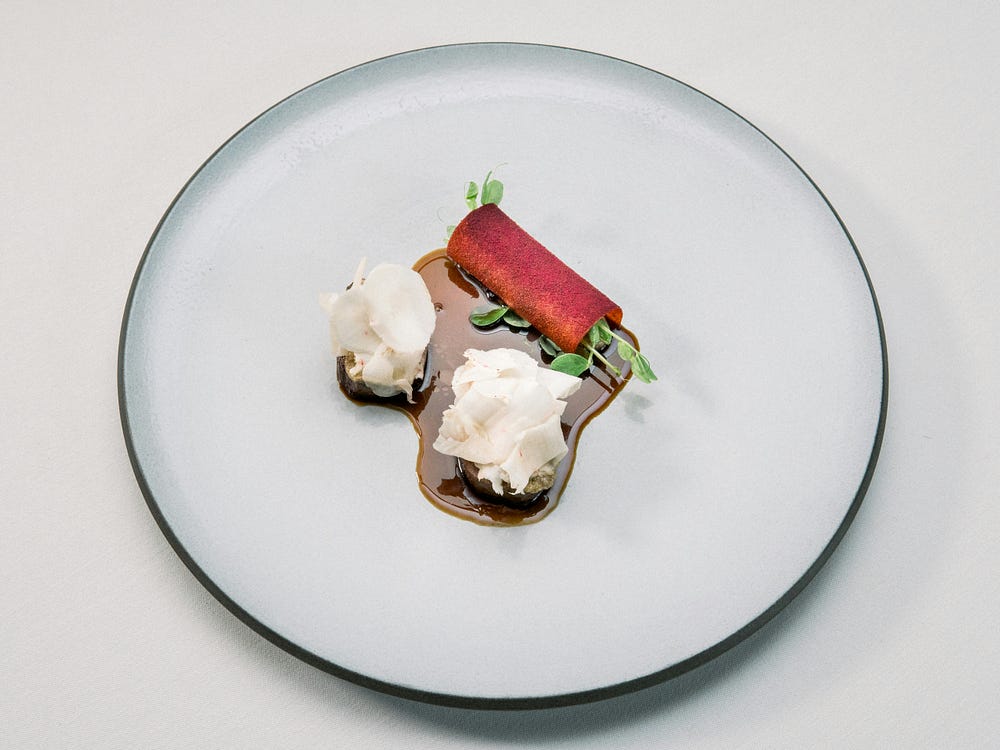
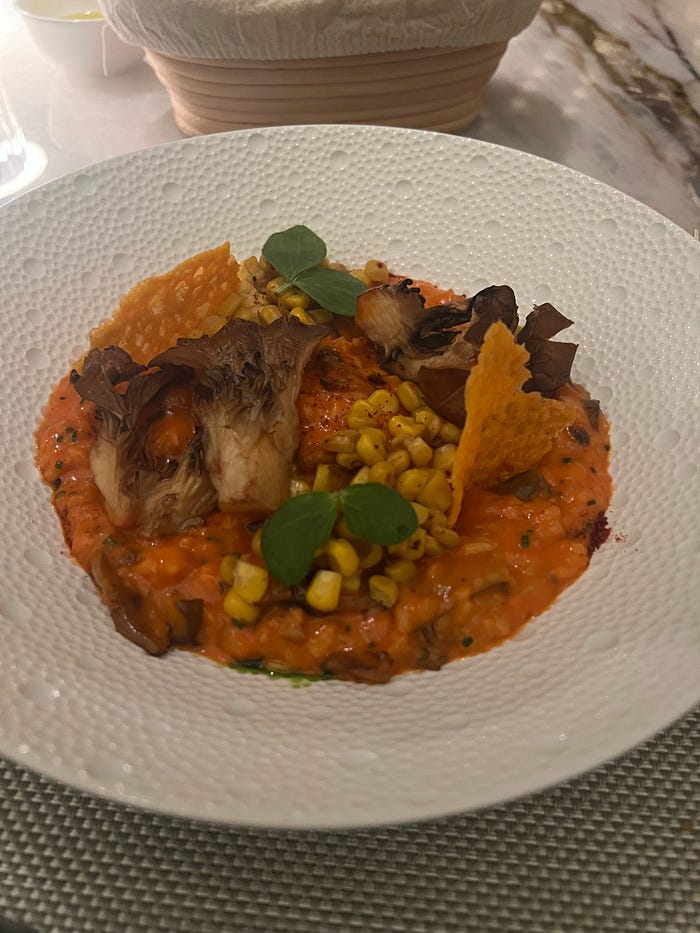
“The mushroom and corn risotto,” the waiter announced, setting down a plate with an orange pudding of rice garnished with charred corn and mushrooms. “Inspired by autumn in Italy’s countryside.”
I nodded and took a spoonful. The rice was creamy, earthy, tinged with truffle oil that coated my tongue. Once the taste dissipated, there were notes left of the sound of my own breathing in an empty apartment.
Photo of Mushroom & Corn Risotto taken by me
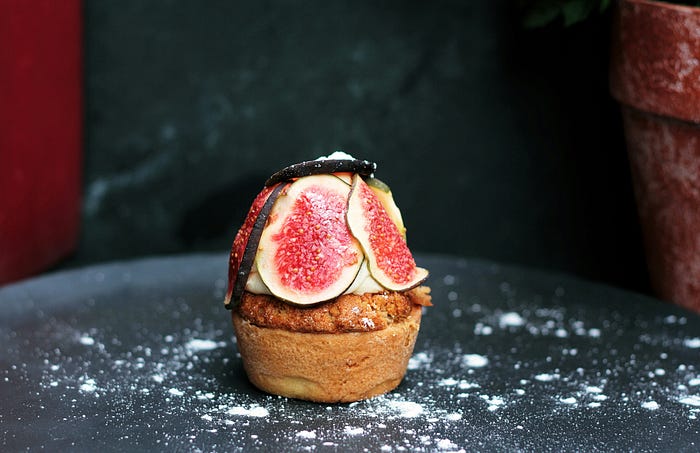
Each course arrived with a less generous portion. By the time dessert came — a fig tart that can be held in a child’s hand — the night was getting older in ways that had nothing to do with my hunger.
“Happy birthday,” the waiter said, placing the tart in front of me.
A smile crept up on my face, the way you smile after being slapped and handed a napkin afterwards. The tart was gone in two slow bites. I sat there for another twenty minutes, nursing my wine, as the restaurant emptied around me.
My solo celebration came to a conclusion and I ubered back home. My driver’s country music playlist grinding against concrete, my stomach tight with expensive food that had filled nothing. When I got to my apartment, I stood in front of the bathroom mirror and cried as I wiped off my makeup. Then I microwaved a bowl of dumplings and sat in front of my TV, and called it a night.
Little Hunger
I’ve been thinking about the women on television who mirror something I recognize in myself. In the movieBurning(2018), Haemi, the lead female character, strips bare against a dying light; her body becomes a prayer dance written in shadow and gold hues. She moves like water finding its way downhill. In the film, she speaks of the African Bushmen tribe’s wisdom: two hungers carved into the human heart. Little Hunger claws at your belly. Great Hunger devours your soul.
I sat on my couch, knees tucked tight against my ribs, and something cracked open inside me. Little Hunger had walked beside me on those brutal Mississippi runs, my stomach hollowed out, old leather split lips, nursing just enough water to keep my legs moving. I’d tasted it in the sharp mathematics of counting change for a sleeve of crackers, rationing hope like it might expire any day now.
Little Hunger is being Black and young and living on your own in a town that forgot your name the moment you stepped off the sidewalk.
But Great Hunger lived deeper. It made me press myself against anyone who’d let me, clutching at strangers like they held the secret to breathing. Haemi gravitates toward Jong-soo, the boy who crushed her younger self with casual cruelty. Then Ben appears — all expensive cologne and empty promises, offering her glimpses of a life that shimmers just out of reach. She’s in debt, severed from family, burning with questions that have no answers. Her hunger goes beyond, but is proof that she exists. Until, she literally disappears.
Scene from the movie Burning (2018) where Haimei explains Little/Big Hunger.
Then there’s Sydney from The Bear, wielding her knife like it could cut through all the noise. She doesn’t chase love or even a Michelin star — she hunts for mastery. But the kitchen becomes a battleground under Carmy, a man so wrapped up in his own wounds he can’t step past them. He barks orders and swallows her sentences whole, leaves her to untangle messes she never made. Sydney bleeds into the restaurant — her sleep, her peace, her dreams of something greater. She shows up before dawn, stays past midnight, and sharpens her blade until her fingers cramp.
That hunger lives in my bones too. The way it eats at me from the inside, the need to prove I belong in rooms that never wanted me there. I’d stayed late at jobs that ground me down to nothing, hoping someone would finally say the words, “You’re good. You’re enough. You can rest now.” Sydney’s hunger feeds on purpose, on the promise that someday her culinary vision will mean something.
And then, we have Dre in the television series, Swarm.
She consumes everything. Bodies, souls, music, and gas station candy that sticks to her teeth. After her first kill, she tears into a cherry pie with blood still smeared on her hands, and the way she eats it — I can’t even describe. Can’t make out whether it was like a feral animal or a caveman at the cusp of his humanity. This scene out of the few others shows she doesn’t eat for pleasure. She eats to survive the aftermath of her own fury, to remember what it means to swallow something willingly. An orphan abandoned by everyone who should have loved her into wholeness, but instead she’s let neglect shape her into something the world can’t name as human.
I’m not Dre at all. But I know the spiral that drives her — that white-hot rage that lives behind teeth, the way walls become armor when tenderness cuts like a blade. Instead, I’ve chosen silence over softness because softness gets you hurt. I’d learned to starve my own wants until they whispered instead of roared.
These women are all versions of the same story of what happens when female appetite gets twisted by abandonment, by the learned belief that our needs are burdens, that our desires are dangerous. We become either obsessively controlled or completely chaotic, either invisible or so seen that you disappear.
Dessert is supposed to satisfy completely in its look and taste. But for women, satisfaction is complicated by the question of whether we deserve it in the first place. To question the conception of the question, “Should I treat myself?” Every bite we take carries the weight of judgment, every moment of fullness overshadowed by the possibility of punishment.
Lately, I’ve been trying not to eat at night. I brush my teeth early, wash any dishes by ten, turn the lights off in the kitchen like that’s enough to make the cravings dissolve. I tell myself the day is over, and I already had dinner. “You know better now” as I tuck myself into bed.
But after eleven, I start hovering. I open cabinets just to check for food or permission maybe? The voice sends me back to bed and I scroll Pinterest instead. I fall into a loop of women with collarbones sharp enough to slice oranges, arms thin enough to disappear inside coat sleeves, and visible thigh gaps. My Pinterest board is full of the images I hate myself for loving. I start bargaining, “if you want to look like that, then you don’t get to go back into the kitchen.”
This time it isn’t any bingeing or smashed plates, but shame that sits quietly. And it sounds like, “You did good. You stayed out of the kitchen. You were strong.”
But the craving doesn’t leave. It just changes shape. It sharpens behind my ribs, settles into my chest, sits beside me like a woman in a dress too tight to breathe in. Smiling with her legs crossed, she doesn’t eat the cookies. And I watch her. I wait. She has enough.
Thank you for reading this piece of my soul. If you would like to read more of my essays and poetry, visit my website or follow and subscribe to my Medium here. You can find me on Instagram as well @dsmithwrites.
Nurture yourselves and each other.” — is what I heard them say. And what I mean by “them” is the ones on the other side. A couple of months ago, I had a third-eye-that’s-so-raven moment where I heard this during the full moon in Taurus.
If you don’t know, I’m kinda psychic… and maybe that’s one of the reasons why I haven’t found my community yet.
Lately, I’ve been thinking about this message and also seeing more and more people speak up about how we need to have more community in our society (society as in — the Western world — just a small fraction of the globe). From Trump being re-elected in 2024 to the “loneliness epidemic,” I understand why people are championing this. However, I believe many people say a bunch of things over the internet that sound good and hopeful, but collectively they aren’t doing much in reality to make a difference.
You really think you’re gonna overthrow oppressive systems but can’t even maintain a three-person group chat?
Gen-Z: the generation that ghosts and grieves in the same sentence
People, especially my generation (Gen-Z), have made it a habit to ghost, and on the other hand, expect to be ghosted in both platonic and romantic relationships. That’s on top of the fact that people don’t keep in contact with their closest relatives or friends in real life. But I know I’m going to get some people to say, “because of capitalism…” or “oh we don’t have third spaces…” and other rationales that don’t play a big factor in having genuine relationships. Yes, these are all real annoying barriers. But, they’ve also become a convenient shield for our own unwillingness to be accountable to others in the smallest, most human ways.
Our parents and older generations would invite their friends over for pizza or play a game of cards or just talk on the phone for hours. For instance, my mom would spend hours on the phone with her friend after work (or on her day off) while doing tasks around the house. My mom and her friend didn’t have brunch spots and karaoke bars, especially while living in the Mississippi Delta. She had her Blackberry phone and laundry to fold. She still managed to talk to her best friend every week while upholding her work life and familial relationships.
We say we don’t have time to hang out or check in, but people will spend hours watching TikToks of strangers crying in their car. We give our attention to spectacle, not to each other. And then turn around and romanticize deep friendships, community living, found families, but treat people in real life like notifications we’ll get to later.
Real-world scenario kids
I had a friend who I met through the oh-so-wonderful Bumble BFF app (that’s another blog for another day), and we agreed to meet for the first time for brunch. We met up and everything went well; we had some good food, mimosas, and a nice chit-chat that went on for about 2 hours.
Post-first meetup (first and last): We had these long drawn out conversations via text for about 2 months. I mean I don’t know about you girlypops but there is nothing normal about stretching out a text after asking a simple question: “What are your plans for the weekend?”
For another month, I would suggest doing something together but I was met with either 4-day responses or something “came up.” Then, one day — dead silence.
After almost 3 weeks of not hearing from her, she then suddenly wants to meet up for an outdoor jazz event out of nowhere. At first, I wanted to go, but then I canceled due to my “trauma response” where I abandon before being abandoned. Since then, we haven’t spoken to each other.
We say we don’t have time to hang out or check in, but people will spend hours watching TikToks of strangers crying in their car
And I’m not above any of this. I’ve ignored people I loved and I made excuses. I’ve watched myself slowly fade from someone’s life like it didn’t matter, and then pretended I didn’t notice when the distance turned permanent. My own silence has become habit, and has made detachment look like independence and being “mature for my own age.”
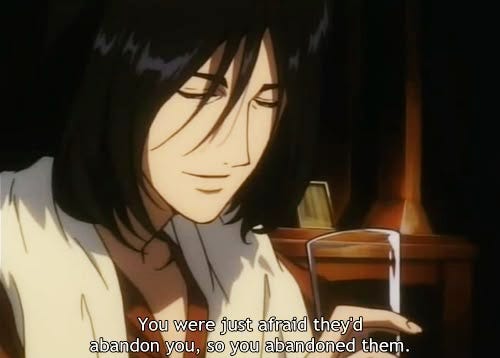
Image found on Pinterest. This scene is from Cowboy Bebop (1999).
If I had to theorize, I would say I think we’re terrified. Scared if someone really saw us — how inconsistent we are, how unsure, emotionally strange, and socially misshapen we’ve become, then they’d leave too. So, we don’t give them the chance.
Gendered hypocrisy
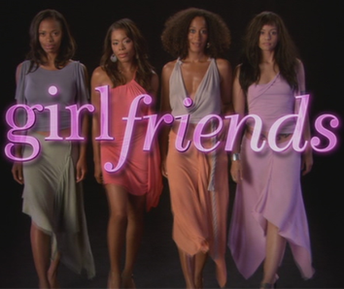
OOOOO nobody’s safe! Yes, I’m about to get on my girlies, my girlfriennndddds (Girlfriends TV show tune) too.
What’s been eating at me lately is how easily we accept distance in our platonic relationships, especially cis women. The same women who would spiral if their boyfriend took six hours to respond will go six weeks without checking in on a friend. And I’m tired of pretending that’s okay and it doesn’t hurt.
Image from Wikipedia. Image is the Girlfriends TV intro.
We give romantic partners the kind of effort, presence, and forgiveness we don’t even offer to our friends. And I think a lot of women don’t realize that we’ve internalized this illusion that romantic love is urgent, and it’s supposed to be dramatic and all-consuming. Yet, friendship is optional, decorative, the side dish to your main emotional meal. But friendship is one of the relationships most of us will have for decades longer than many romantic partners. And still, we don’t treat it like it matters. We don’t fight for our friendships (even familial relationships) the way we beg men to care about us.
And if we want to go deeper — some of us are committed to healing our inner child through romance, but wouldn’t know how to receive softness from a friend unless it came with the threat of losing them. You know how to chase, but don’t know how to be witnessed gently.
Fellas, fellas, fellas
If women are taught to overextend, be available, forgiving, and self-sacrificing, then men are taught the opposite. Most of the men I’ve known, and the ones I’ve eavesdropped on from a distance, aren’t building their friendships around care, softness, or presence. They’re building them around permission. Permission to be seen as successful, powerful, and untouchable. Most of their “bonds” are based on mutual ego-stroking, a group project in patriarchal validation, as long as no one actually says they’re lonely or going through a rough period in their life.
These are friendships defined not by active connection, but by absence without consequence. Their friendships don’t require tending, they just exist in some suspended state of assumed loyalty that doesn’t demand emotional effort. And when SHTF — loss, heartbreak, mental illness — most of them don’t even go to each other. They go to the women in their lives. Their girlfriend, their mom, maybe a sister. Or they don’t go to anyone at all.
And it makes sense, because men are taught that vulnerability between men is a risk. Most haven’t been given the emotional tools to say, I need you, or I’m hurting, or even I miss you, without it being filtered through “no homo” jokes, sports talk, or some shallow excuse to link. Their friendships revolve around activities, achievements, group chats with zero depth and sardonic memes, and sometimes, thinly veiled competition. The big unspoken rules among them are: don’t need too much. Don’t be too soft. Don’t get too close.
And if we want to go deeper — some of us are committed to healing our inner child through romance, but wouldn’t know how to receive softness from a friend unless it came with the threat of losing them
So what happens is this:
A man can have ten friends and still die of emotional starvation. He can go to the gym with them, game with them, drink with them, talk money or girls or sports, but none of them know how to hold grief. None of them know how to say, you don’t have to act okay here.
And then they enter romantic relationships carrying that starvation, expecting their partner to be therapist, best friend, co-regulator, their mommy and emotional processor all in one. Because they’ve never had to sit with these feelings and experience among their peers.
Performative activism & false collectives
Now, time for the collective callout. I’ve seen so many people (myself included) wrap ourselves in the language of radical care, abolitionist futures, decolonial collectives, and mutual aid, while not even knowing how to say no in real life. You talk about “revolution” but can’t even tell your friend they hurt your feelings. You want to dismantle systems but can’t even make a doctor’s appointment over the phone. You can’t even stand up to your boss.
We are fluent in the aesthetics of liberation, fluent in the language of collectivity, but allergic to the practice of it. However, I get it — saying the right things online feels safer than having to do the awkward, clumsy, low-stakes, and maybe risky things in your actual life. Like checking on a friend, asking for help, or setting a boundary. Or calling something out when it’s happening in front of you, not just when it’s trending.
It’s easy to sound like a radical on Twitter. It’s easy to talk about community gardens when you haven’t even watered your own relationships. It’s easy to say “burn it all down” when you’ve never had to rebuild anything in your own life.
Honestly, I’m intrigued by it. Intrigued by the way we sometimes parade as organizers, healers, artists, and mutual-aid architects, when half of us still flinch at confrontation and most of us are running from the kind of vulnerability and truth that real community demands.
I’m not saying it’s all fake or a fantasy to hope for these changes; but we must first confront the fact that we pretend we’re part of something just so we don’t have to admit how alone we really feel.
Soft but firm reckoning
I know I came in with this pretty strong; again I have done some of the things I’m calling out here. Truth AND accountability really does set you free. But, I’m trying.
I’m trying to stop rehearsing loneliness like it’s my final act. Stop confining myself to my home to hide from the world and only interacting with it through a screen.
Photo taken by me while at a local park.
Because the truth is, I do want community. Having zero friends nor any “associates” (no exaggeration) is extremely isolating and it starts to mess with your mind. Plus, I want to share my gifts, my love and care, to to others as well. So yes, I want softness that doesn’t require translation. I want people who know how to knock before entering, and also know how to come in anyway when I leave the door cracked. But wanting it isn’t enough. Writing this isn’t enough. I have to build it slowly and imperfectly, with the people already around me (even if it’s just my parents and my dog), not the fantasy of who I think my “tribe” is supposed to be.
So here’s where I’ll leave you (no pun intended there)
Who’s one person you haven’t talked to in a while whom you actually miss? Not someone who hurt you or drains you. Someone you miss.
Why haven’t you called them? Why haven’t you asked them how they’re really doing?
Don’t answer out loud. Just sit with it.
Then maybe, when you’re ready, do something about it.
Thank you for making it this far through my rambling! If you would like to read more from me, follow and subscribe for the latest posts. Also, check out my website here.
Each morning brings a fresh obsession, a new hyper-fixation that my OCD brain clings onto. Yesterday it was a half-blind Black woman riding across Nevada dust with nothing but a six-shooter and the kind of vengeance that burns cool. The other morning my granddaddy’s hands appeared, calloused and slick with Mississippi clay that never quite washes off. And tomorrow might bring vampires whose bite finally feels like truth against my skin.
There are too many stories in me. They arrive on the hour like hunger, like heat flashes, like hauntings. I used to think something was wrong with me. Now I think I might be an oracle.
Yes, I’m spiritual as fuck too–in fact, some of my muse draws from glimpses of my past lives. Yes, you and I may have had a past life as cats. But, of course, this is a discussion for a later time.
God, the ideas never quit. My novels (yes, as in plural) keep me up overnight. Zine ideas materialize while I’m washing dishes. I’m always awaken at 3am to the voices of my ancestors. I have sticky notes to pin to my shower in case an idea for a short story comes up.
It’s comforting to know that I’m not the only person who gets their best ideas while taking showers.
Somehow, I’m still able to imagine these entire worlds with their own physics. Sometimes I wonder if I have more beginnings than most people have thoughts in their entire lives. Holding them all makes me feel fractured and mad, forever unfinished, somehow unworthy of completion.
Sometimes I wonder if I have more beginnings than most people have thoughts in their entire lives.
And funny thing is, even in my writing — the one place I should feel absolutely free — I’ve still been trying to hold it all in.
Brand it and package it.
Make it small enough to double-tap or get between subway stops.
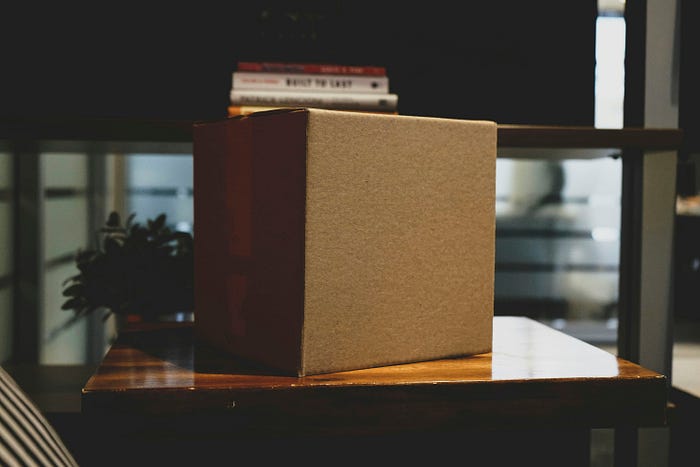
The Box I Built (and Now Must Burn)
Found on Pinterest.
When I started my Instagram I leaned hard into gothic/southern gothic aesthetics. It fit. No wait, it almost fit. This was around the time when I started taking my poetry collection Swamp Girl seriously, which by the way is a working title at this point. I truly believed I could publish it within a year. Wrap up an entire childhood of grief and ghosts in 100 pages or less.
How naive we are when we begin things.
Swamp Girl refused to behave. It unraveled into something wilder and deeper than I ever expected. Mississippi isn’t just some state I left behind. It’s an open wound. A psychic realm I tap into from time-to-time. A memory I’ve been half-drowning in while pretending I could breathe underwater. I realized I couldn’t just write one collection and walk away whistling. And what was worse, I had trapped myself in an aesthetic prison before I understood the full weight of what I was carrying.
I had accidentally become everything I swore I’d never be: digestible and marketable.
A writer with a brand that made sense to scrolling thumbs at 2 AM but felt increasingly foreign to my own hands when I tried to type. I’m having trouble staying confined to one genre, one tone, and one story when I contain multitudes of them.
Reality Check: My Real Life as a Creative
BOOM!
Reality hits.
I work a part-time copywriting job that pays minimum wage. I write blogs and email campaigns that hardly anyone looks at. Not much is glamorous about it besides getting to work from home, which can be needed at the best of times. But it buys me time. And honestly, as artists our meals usually look like air and muse anyway.
My apartment could fit inside most people’s living rooms. My notebooks are from Dollar Tree because something about a dollar-priced journal just makes the writing in it more priceless.
I haven’t had health insurance for over a year now. I skip lunch when the month runs longer than my money. These aren’t complaints, but facts that interrupt the chaos. Currently, I find myself wanting nothing more than a space where I can’t be interrupted.
Scrolling through my Instagram feed, I came across this post that had a picture of Indian writer Baby Halder and the headline “This Writer Supported Herself Through Domestic Work And Published Her Own Memoir.” Of course, the spiritual side of me takes this as a “sign.”
However, this quote I read from Baby, stuck with me:
“Still I write. My Taatus (father) would tell me, even if nothing is going well in life, this is one work you can always do. Consider this part of your life — even if there is no work, writing will become your work.” — Baby Halder
Baby didn’t have a work from home job writing boring blogs for marketers, she worked as a cleaner while being a mother raising three children seeking refuge from an abusive household.
And she still wrote.
Writing isn’t something just for expression but a way of breathing. It is our life. This is further proven with Baby being a prominent writer known for her exceptional memoirs.
I took my current job not because I’m giving up on writing but because I’m finally giving in to it. Surrendering to the life I’m actually building instead of the one my college career counselor insisted I should want. I’m here to write until my fingers cramp. To remember everything they told me to forget. To unshrink myself word by terrifying word. Even if I never go viral or never “arrive” at whatever bullshit destination success is supposed to be. This life is still mine.
Who I Really Am: A List of the Loud
I am a writer who needs to channel my sexual energy into vampire novels where consent and blood become the same substance.
I am a writer who can’t stop dreaming about Old Westerns where black women ride across dust that tastes like vengeance and freedom.
I am a writer who wants to make kawaii stationery with tiny ghosts in the margins while simultaneously running a gaming chair business because comfort matters when worlds are being born and when they die.
I am a writer desperate to say what terrifies others to whisper about grief and madness and lust and girlhood and trauma and God and what dwells in the unconscious.
I am not just speaking for myself anymore. I write because for twenty-something years I didn’t know how to speak at all.
My childhood selective mutism never really left. It morphed. I can go weeks without social contact or posting anything online because I’m frantically trying to calculate what version of myself that’s most tolerable virtually and in real-life.
I exhaust myself trying to choose one self from many. But the truth breaks through anyway: I am not one self. I have never been one self. I am not a goddamn brand. I am a chaos-being wearing human skin.
A Soft Rebellion
Image found on Pinterest.
I’m not rebranding. Instead I’m remembering.
I’m re-learning how to let my writing be a field, not a funnel.
So if you see me write about sirens one day, and vampire lovers the next — don’t ask me to pick one. I already have.
I pick me. All of me. The chaos-being. The oracle. The glitch in the algorithm. The girl with too many poems and stories, and the nerve to try to write them all anyway.
Everything Everywhere All At Once Gif
I am giving myself permission to be everything at once. To let my mind wander where it will. To follow each story to its natural end, whether that’s a published book or just a scribbled note that no one but me will ever see.
The world doesn’t need another neatly packaged writer who fits into a clean marketing category. The world needs truth-tellers. Chaos-bringers. Oracles who speak in many tongues.
So I’m gonna keep writing. Keep creating in ways that make sense to no one but me.
Because I’m not here to be understood. I’m here to be true.
There are too many stories in me. And I’m finally brave enough to let them all speak.
Follow the Chaos
If these words resonated with you or if you just want to see how all of this is going to unfold, visit my website or follow me on Instagram @dsmithwrites.




 D.Smith Writes